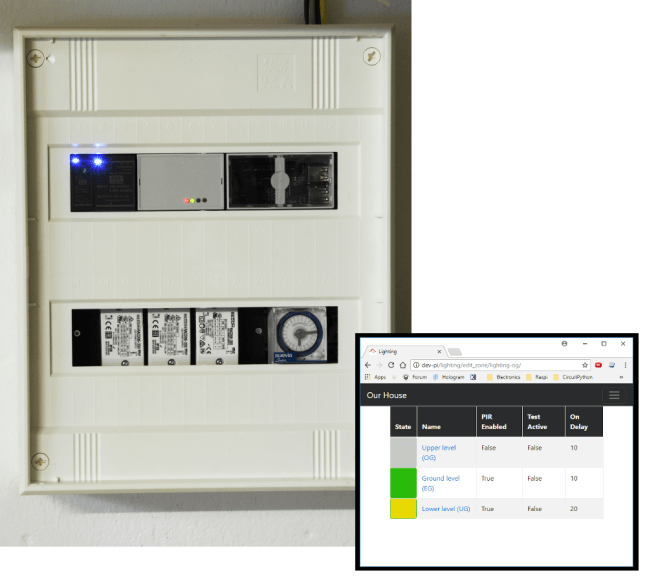
Upgrading the Stairwell Foot-lighting Project
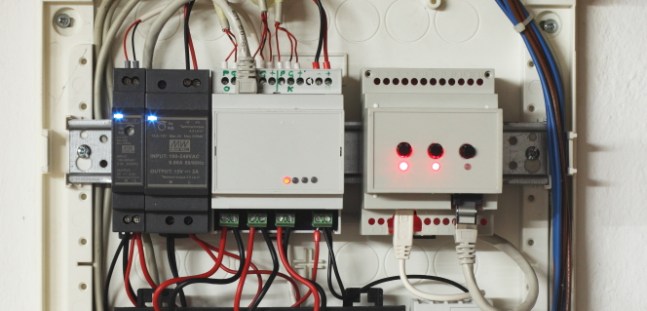
The Timed LED Lighting Control project has been driving the LEDs in our stairwell since 2017. The system is based on two modules. A custom built LED driver, which has been running faultlessly, and a Raspberry Pi + Django based user interface. This year the user interface module died. In this post, I describe the … Continue reading Upgrading the Stairwell Foot-lighting Project
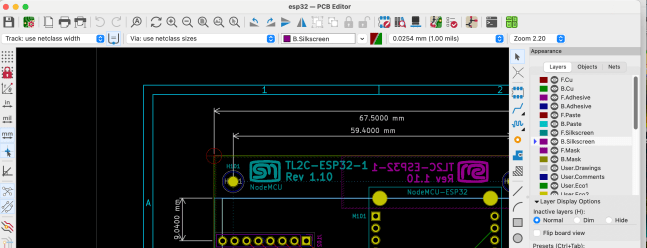
Avoiding Mechanical Parts from Disappearing in KiCad

When creating a PCB layout in KiCad, I often have need to add a mechanical part to the PCB layout. The easy way is to add these parts directly from within PCB New. The problem is that when updating the board from the schematic, it is possible that these extra footprints will be removed. In … Continue reading Avoiding Mechanical Parts from Disappearing in KiCad

Wrapping up the Timed LED Lighting Controller Project

Introduction I have written about the Timed LED Lighting Controller in previous posts. Starting with the original entry “Stairwell Foot Lighting System”. In this entry I will be wrapping up the project and describing the change of direction from the initial design and layout. There may be a bit of overlap but it will be … Continue reading Wrapping up the Timed LED Lighting Controller Project

“Mocking” – Minimising Risk

In the last post  for the Timed LED Lighting Controller, I had figured out the circuit and a basic layout and approach that I was happy with. That is to separate the hazardous voltage from the control circuitry by putting it on a separate board. But still, this was not enough. I need to assemble … Continue reading “Mocking” – Minimising Risk

Timed LED Lighting Control – Design

From Logical to Physical Before I could start to translate the block diagram into KiCad, I needed to be sure about some of the parts I will be using. I want to reuse what I already have installed, so the motion detection module is already a given, along with the LED drivers. The micro controller needs three … Continue reading Timed LED Lighting Control – Design

Wired for Action – almost

In the last post, I presented the initial ideas for powering the project. Now it is time to move on and start looking into the individual modules. I was impressed as to how quickly this part progressed since I had done the up-front thinking of the pin and port allocation. So much so, that before … Continue reading Wired for Action – almost

Module One – Power On!

In the last post, the basic device was layed out in terms of requirements, block diagram and a state machine. It is clearly not 100% complete but I don't believe that the whole project should be blocked, trying to model absolutely everything. As the project develops and matures, issues will be encoutered and design decisions … Continue reading Module One – Power On!

Modelling First

I have mentioned about the re-working of an old alarm clock. In this post, I will be kicking the project off and introducing my efforts to model the requirements and project organisation in SysML. I will be using Systems Architect from Sparx Systems. Project Organisation The project organisation shows the directory structure of the project … Continue reading Modelling First